Thursday 19th March 2026, 5pm-7.30pm,
Online via Kinema* and in person at University of Westminster and University of East Anglia
Followed by a discussion with Dr How Wee Ng
In partnership with the Centre for Social Justice Research, University of Westminster &
New Area Studies Research Centre, University of East Anglia
This screening is free but requires registering. Please send an email to Dr Syed Haider (s.haider@uea.ac.uk). You will receive information about joining the event online should that be how you wish to attend*, or information about the in-person screening should you wish to join a live audience at the University of Westminster or the University of East Anglia (rooms tbc).
*Those wishing to join online should secure a free ticket via the Kinema platform here (to go live shortly).
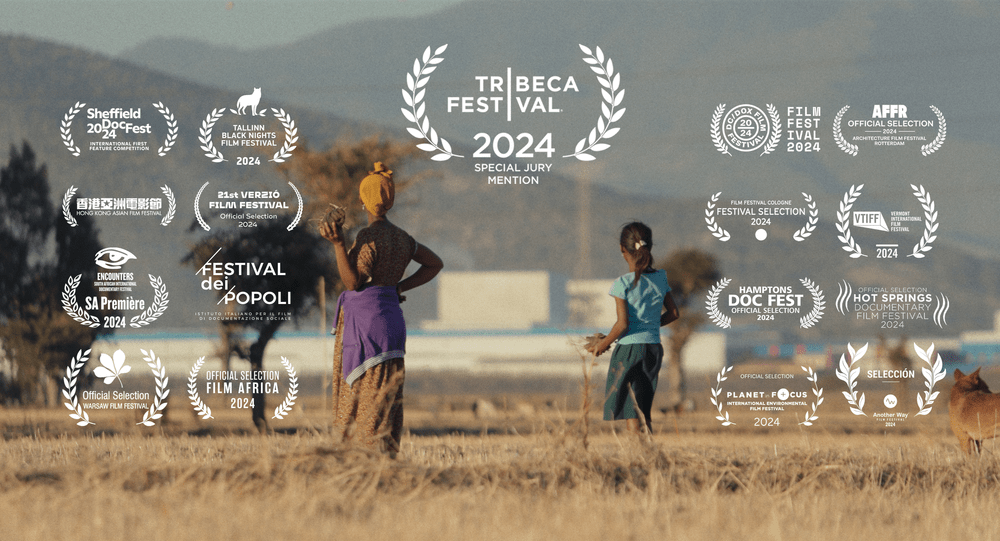
You can read more about this event in the following brief. Here we outline important information about the film and about Dr How Wee Ng, whose profile you can read here.
Read Steven W Thomas’ review of the film, published in African Studies Reviews here.

The Portrayal of China in Ethiopia’s Creative Works by Balew Demissie Kebede (2025) is a useful read and “examines the portrayal of China in Ethiopian artistic works through the lens of Orientalism, postcolonialism, and representation theory. It focuses on six artists who use different narrative modes to illustrate the relationship between China and Ethiopia. Through textual analysis, the article examines the motifs, narratives, and ideological constructs that shape how the creative works view China. The article argues that after Ethiopia’s 1991 political change, creative works began reflecting the evolving Ethiopia-China relationship, shaped by economic, cultural, social, and political ties, with artistic expressions celebrating and critiquing it. The findings reveal that most Ethiopian creative expressions depict China positively, highlighting its economic and cultural influence. However, they also uncover a subtle scepticism underlying this portrayal. The analysis examines how these representations show economic, social, and political changes shaping South-South relations and culture. The article contributes to the discourse on China’s role as a key partner in Ethiopia’s development and modernization and its implications for bilateral relations in a globalized context.” Read this essay here.


 worldcinemaspotlights.com